
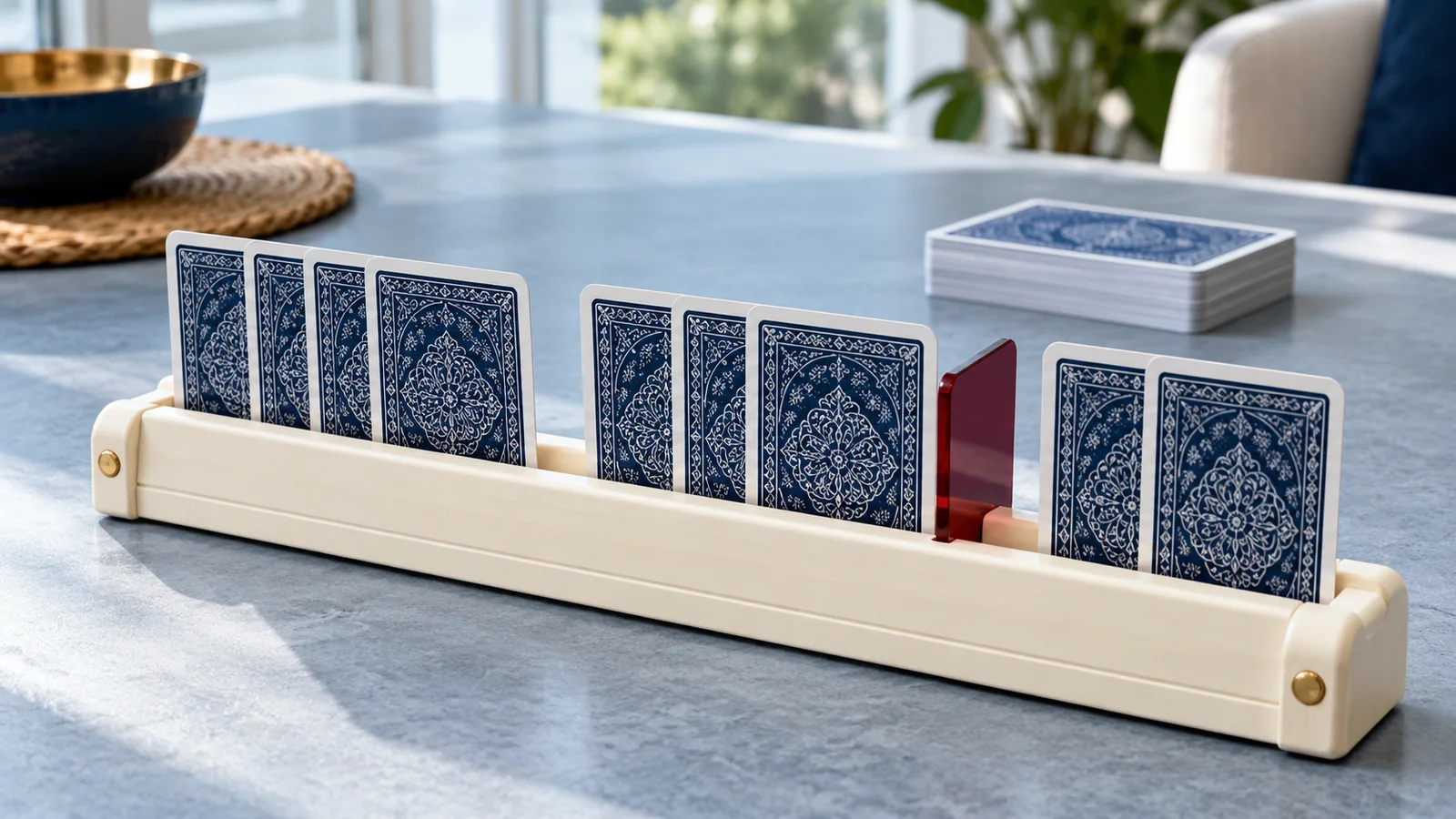
A Rummy hand becomes easier to read when every card has a place on paper. List its rank and suit before deciding which groups belong together. Greatwin’s supplied description names Rummy alongside Teen Patti and Andar Bahar. This guide focuses on the vocabulary of a Rummy grouping and a method for checking a rule explanation. The cards are invented examples, and the worksheet does not establish a valid declaration in any particular product.
Put the variant name at the top
Begin with the exact version whose rules you are reading. Write down its title and where the rules were published. A familiar Rummy label can cover different hand sizes, scoring systems and declaration requirements. Keep the selected version in view throughout the exercise. If a rule uses a term such as pure sequence, find that version’s own definition before deciding that a group qualifies. A word remembered from another game can conceal a different condition.
Make rank and suit separate columns
Take an imaginary group containing the four, five and six of clubs. List all three ranks in order and mark clubs beside each card. That arrangement illustrates consecutive ranks in one suit. A second sample contains the queen of clubs, queen of diamonds and queen of hearts. Its defining feature is matching ranks across different suits. Bicycle’s general Rummy rules explains sets and sequences; its particular game is not a full rule sheet for every Indian Rummy version.
Label a joker instead of hiding it
If a sample uses a joker, identify the physical card and the rank it represents. For instance, a diagram showing seven and nine of diamonds with a joker between them should state that the joker is standing for the eight of diamonds. Whether that group satisfies a particular requirement is a separate question for the variant’s rules. Keeping the substitution visible prevents a teaching diagram from silently changing the cards a reader is checking.
Check the whole hand after its groups
A neat three-card group can be useful without proving anything about the remaining cards. Give every card a single place in your worksheet. Mark any ungrouped cards and compare the complete arrangement with the declaration conditions. Avoid counting one physical card twice because it could fit two possible groups. If two arrangements are possible, write them on separate lines so that each proposed hand can be reviewed on its own terms.
Read scoring as a second calculation
After understanding the grouping rules, locate the scoring section. Record how the named version values unmatched cards, handles a failed declaration and treats any maximum or exception. Do not borrow point values from a different Rummy page. A sample arrangement that illustrates a set does not determine a cash amount or a final score. For a real dispute, the exact rules and recorded hand must be available together.
Ask a question a rule sheet can answer
Instead of asking whether a hand looks right, identify the condition you need explained. You might ask whether a named card can act as a joker in a specified group under the selected rule. Include the variant and the relevant clause when using a verified support channel. Keep private account information out of a public card diagram. The query guide explains how to organise a precise request without sharing account secrets.
The Indian card-format article compares this grouping task with a Teen Patti hand and an Andar Bahar matching rank. The Greatwin subject map connects the casino categories in the source description. This publication is for adults aged 18 and over. Understanding a sequence or declaration does not guarantee a favourable outcome or remove the possibility of financial loss.